- The Opening Print
- Posts
- Globex Gamble: Bounce or Bust? Right Now, Sellers Own the Floor
Globex Gamble: Bounce or Bust? Right Now, Sellers Own the Floor
Follow @MrTopStep on Twitter and please share if you find our work valuable!
Our View
The U.S. is out of balance in many ways, and so far, Russia seems to be emerging as one of the countries benefiting from the Iran war, as oil prices surge, helping its extremely weak economy. It has stepped up its support for Iran, its closest partner in the Middle East, providing satellite imagery and drone technology to help Iran target U.S. forces in the region. Trump’s ally, Putin, may be having the last laugh.
Meanwhile, Trump’s tariffs have hurt China, with imports falling to the lowest levels since 2001, while the deficit rises along with U.S. goods. Both countries have evolved into a more formalized bloc focused on military coordination, intelligence sharing, and mutual defense of nuclear sovereignty.
To bypass Western sanctions, these nations have moved toward de-dollarization in trade and are integrating critical energy infrastructure like the Power of Siberia 2 pipeline. This alignment extends into high-tech sectors, leveraging joint AI and space research to push a more “multipolar” global order that challenges Western economic and naval influence.
Our Lean
Market Recap
1-Month ES Chart
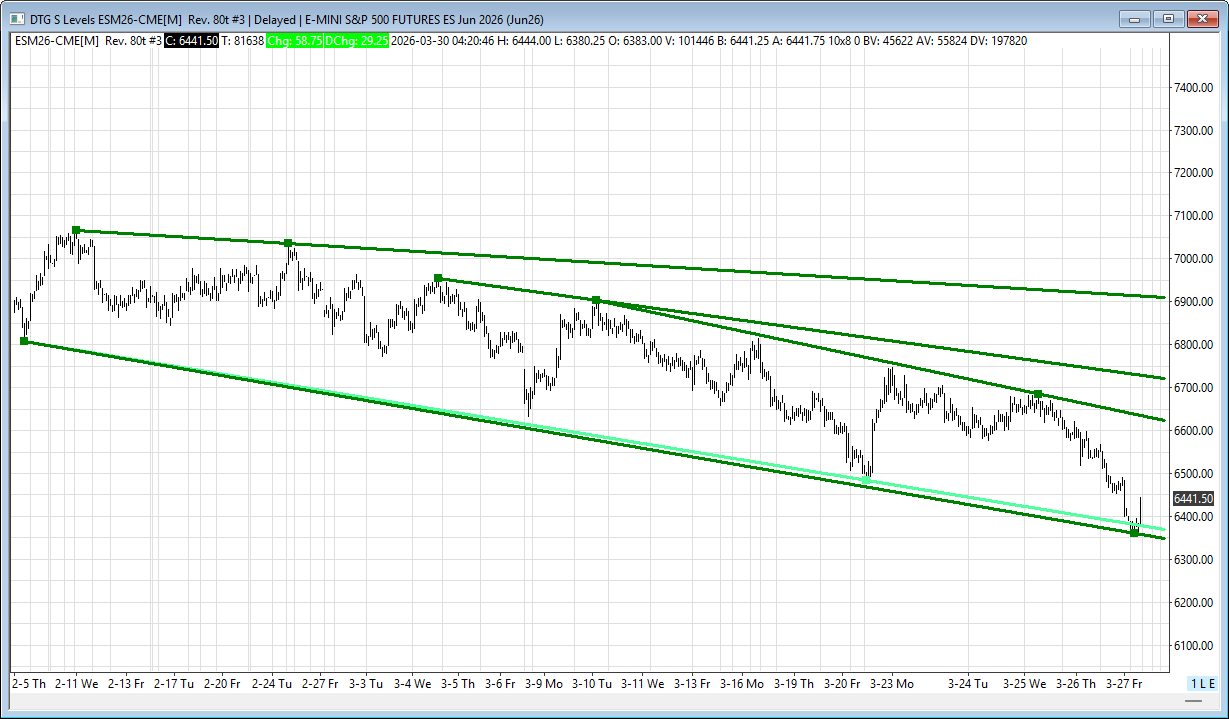
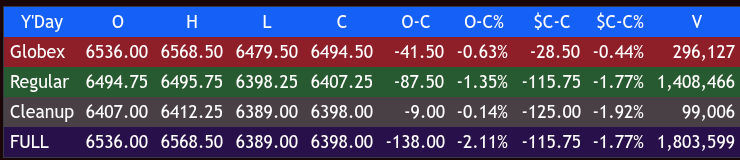
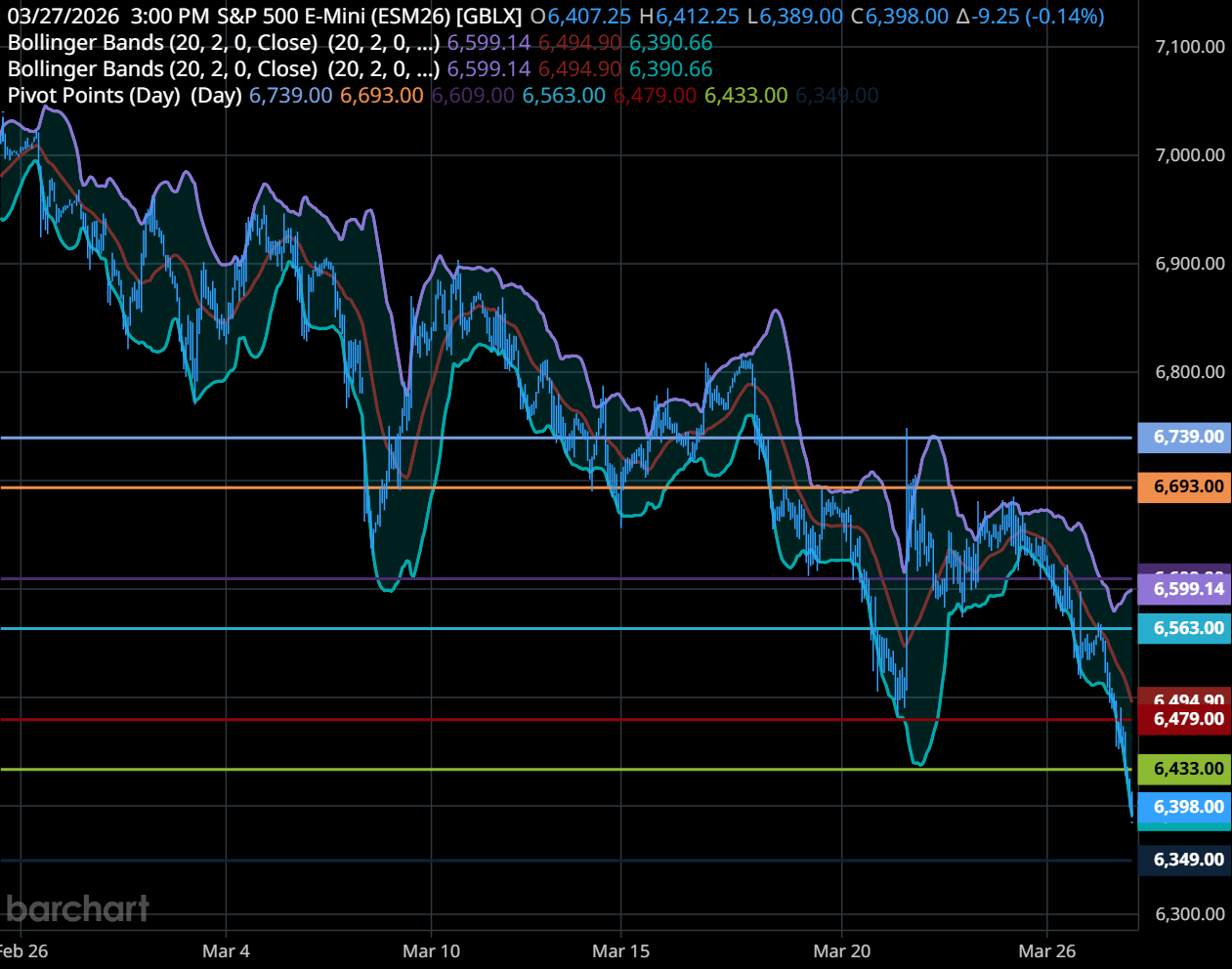
After Trump’s late-day headline and the “big pop” up to the 6590 area, the ES tumbled into the Globex close and traded to a new low for 2026, down to 6479.50 at 9:10 am Friday morning, and opened the 9:30 ET regular session at 6494.75, down 28.50, or 0.44%.
Afer the open, the ES traded 6495.50 marked a morning low at 6451.75 at 10:45. The ES then rallied up to 6481.25 at 11:05 and traded back down to 6457.75 at 11:20. It rallied again to 6490.25 at 11:35, then sold off to new lows at 6419.25 at 2:10. The ES bounced to 6435.25 at 2:20, sold off to 6412.50 at 3:10, and then chopped back and forth until 3:42, when it broke down to new lows at 6398.25 at 3:45.
The ES traded 6405.75 as the 3:50 cash imbalance showed $1.43 billion to sell, rallied up to 6419.25 at 3:55, and sold off down to 6407.25 on the 4:00 cash close. After 4:00, the ES traded down to a new low at 6389.00 at 4:20, rallied up to 6401.00, and settled at 6398.00, down 127 points or -1.95%. The NQ settled at 24,254.25, down 431 points or -1.75%, the YM settled at 45,424, down 806 points or -1.74%, and the RTY settled at 2464.00, down 44.20 points or -1.76% on the day.
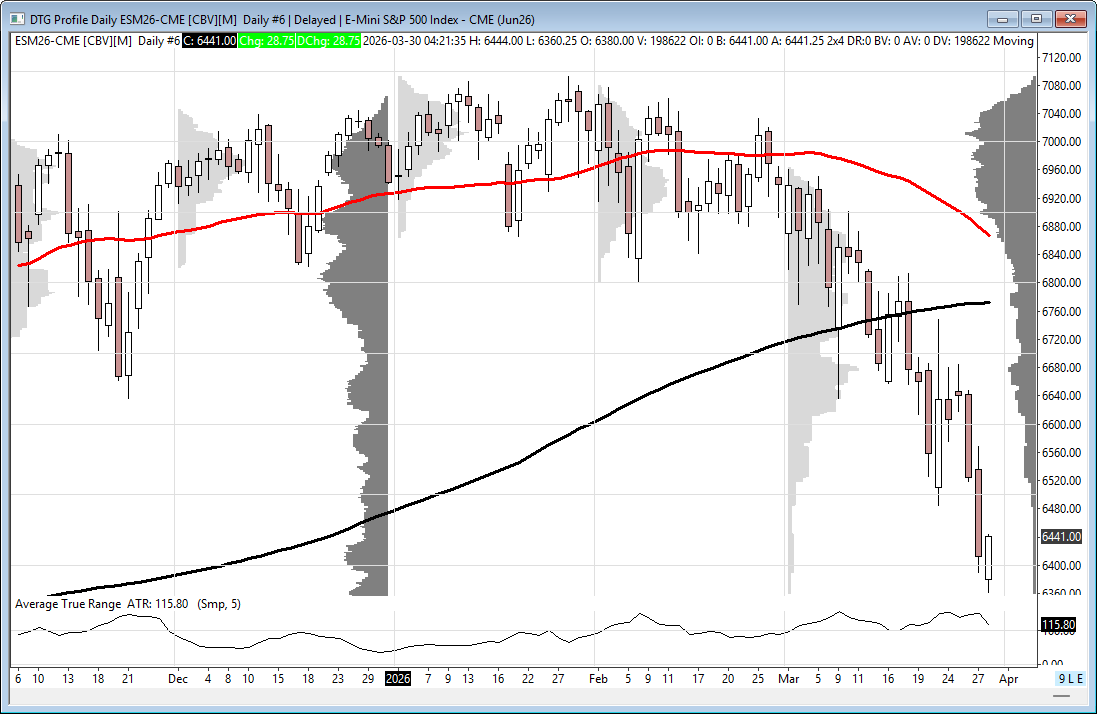
In the end, it was a pretty shitty day for the markets. In terms of the ES overall tone, it broke through 6500, which I have been saying could set up a waterfall event. In terms of the ES’s overall trade, volume was 1.8 million contracts traded.
I mentioned this over a week ago—that the next shoe to drop could be the Houthis announcing their readiness to join Iran against the United States and Israel, which would signal a major expansion of their military operations - and that is exactly what happened. The escalation would include specific threats to target global shipping routes and intervene militarily at the Bab el-Mandeb Strait, a vital chokepoint for international trade.
Amid these rising tensions, the group has continued its pattern of high-stakes naval engagements by launching attacks on U.S. warships. These developments come at a volatile time for the organization, which recently confirmed the loss of several high-ranking officials, including Prime Minister Ahmed Ghaleb Nasser al-Rahawi, in a recent strike.
I could talk about how bad things are, but you already know that. Instead, I am going to stick to the numbers:
S&P Futures
Daily Performance Summary
Down Days: 28 | Up Days: 13 | Flat: 1 (02/11/2026)
Total Loss Calculation
Start (01/28/2026): 7,061.50
End (03/27/2026): 6,412.25
Total Points: -649.25
Total % Loss: -9.19%, down 9.65% YTD
Key Observations
Momentum: 7 of last 8 sessions red
Volatility: Largest drop 03/26/2026 (-115.75)
Range: High 7,097.00 (01/28) | Low 6,389.00 (03/27)
Nasdaq Futures
Daily Performance Summary
Down Days: 14 | Up Days: 8
Total Loss Calculation
Start (02/26/2026): 25,301.50
End (03/27/2026): 23,328.50
Total Points: -1,973.00
Total %: -7.80% and down 12.23% YTD
Key Observations
Momentum: Late-March acceleration (−1,000+ pts in 03/23–03/27)
Volatility: Largest drop 03/26 (-573.50)
Volume: Spike from ~4K–15K → 550K+ (liquidation/high conviction)
Range: High 25,637.00 (02/26) | Low 23,232.50 (03/27)
Dow Futures
Daily Performance Summary
Down Days: 16 | Up Days: 6
Total Loss Calculation
Start (02/26/2026): 49,851.00
End (03/27/2026): 45,424.00
Total Points: -4,427.00
Total %: -8.88% and down 10.82% YTD
Key Observations
Momentum: Persistent selling (~73% red days)
Volatility: 3 sessions > -800 pts (03/05, 03/18, 03/27) | Max -820 (03/05)
Volume: <3.5K → 194K+ by 03/23 (liquidation spike)
Range: High 50,191.00 (02/26) | Low 45,272.00 (03/27)
Russell 2000 Futures
Daily Performance Summary
Down Days: 18 | Up Days: 14 | Flat: 1 (02/17/2026)
Total Loss Calculation
Start (02/10/2026): 2,706.80
End (03/27/2026): 2,464.00
Total Points: -242.80
Total %: -8.97% and down 10.99% YTD
Key Observations
Momentum: Late-March selling acceleration
Volatility: Largest % drop 03/06 (−2.30%)
Volume: Hundreds → 428,385 (03/16)
Range: High 2,738.70 (02/11) | Low 2,415.20 (03/23)
Relative: ~9% decline (in line with NQ/Dow weakness)
I would say this is fairly sobering. While some of the stats start before the war in the Middle East, the ongoing selling and the acceleration of the move lower have increased significantly over 6 of the last 8 sessions. I think you all know that I am a bull, but I have not made a bullish comment in weeks and started my “pessimistic bull” stance before the war began.
The week ahead is going to be particularly important—not just in the geopolitical scene, but with the end of the quarter, the beginning of the new quarter economically, and Fed speak.
MONDAY, MARCH 30
10:30 am — Federal Reserve Chair Jerome Powell speaks
4:00 pm — New York Fed President John Williams speaks
TUESDAY, MARCH 31
9:00 am — S&P Case-Shiller home price index
9:45 am — Chicago Business Barometer (PMI)
10:00 am — Job openings
10:00 am — Consumer confidence
12:00 pm — Chicago Fed President Austan Goolsbee speaks
3:00 pm — Fed Governor Michael Barr speaks
5:10 pm — Fed Vice Chair Michelle Bowman speaks
WEDNESDAY, APRIL 1
8:30 am — U.S. retail sales
8:30 am — Retail sales minus autos
8:30 am — ADP jobs
9:05 am — St. Louis Fed President Alberto Musalem speaks
9:10 am — Fed Governor Michael Barr speaks
9:45 am — S&P final U.S. manufacturing PMI
10:00 am — ISM manufacturing
10:00 am — Business inventories
THURSDAY, APRIL 2
8:30 am — Initial jobless claims
8:30 am — U.S. trade deficit
FRIDAY, APRIL 3
8:30 am — U.S. employment report
9:45 am — S&P final U.S. services PMI

Guest Posts
Trey Oglesby - Swing Room - Weekly Charts
Swing Room Video Replay:
Trey and Tom just wrapped their Week in Review + Next Week Outlook—and if you missed it, it’s worth your time. You’re getting real perspective from seasoned traders who’ve actually navigated these markets, not just theory.
Watch the replay here:
We’re also launching something traders have been asking for:
A dedicated SWING room built specifically for those thinking beyond the intraday noise.
This is where the focus shifts to:
higher timeframe setups (weekly / monthly)
investment-quality opportunities
capital allocation decisions (when to deploy vs. when to stay sidelined)
patience, positioning, and asymmetric risk
If you’ve ever felt like everything is too short-term and reactive, this is the counterbalance.
The SWING room is about clarity, conviction, and letting trades develop.
Free to join: https://mrtopstep.com/l/swing
Add to your calendars a pre-weekly globex open review with the SWING team every Sunday at 5:30PM ET.
Webinar Replay:
Niels Koops: DeltaTrader.com

MiM
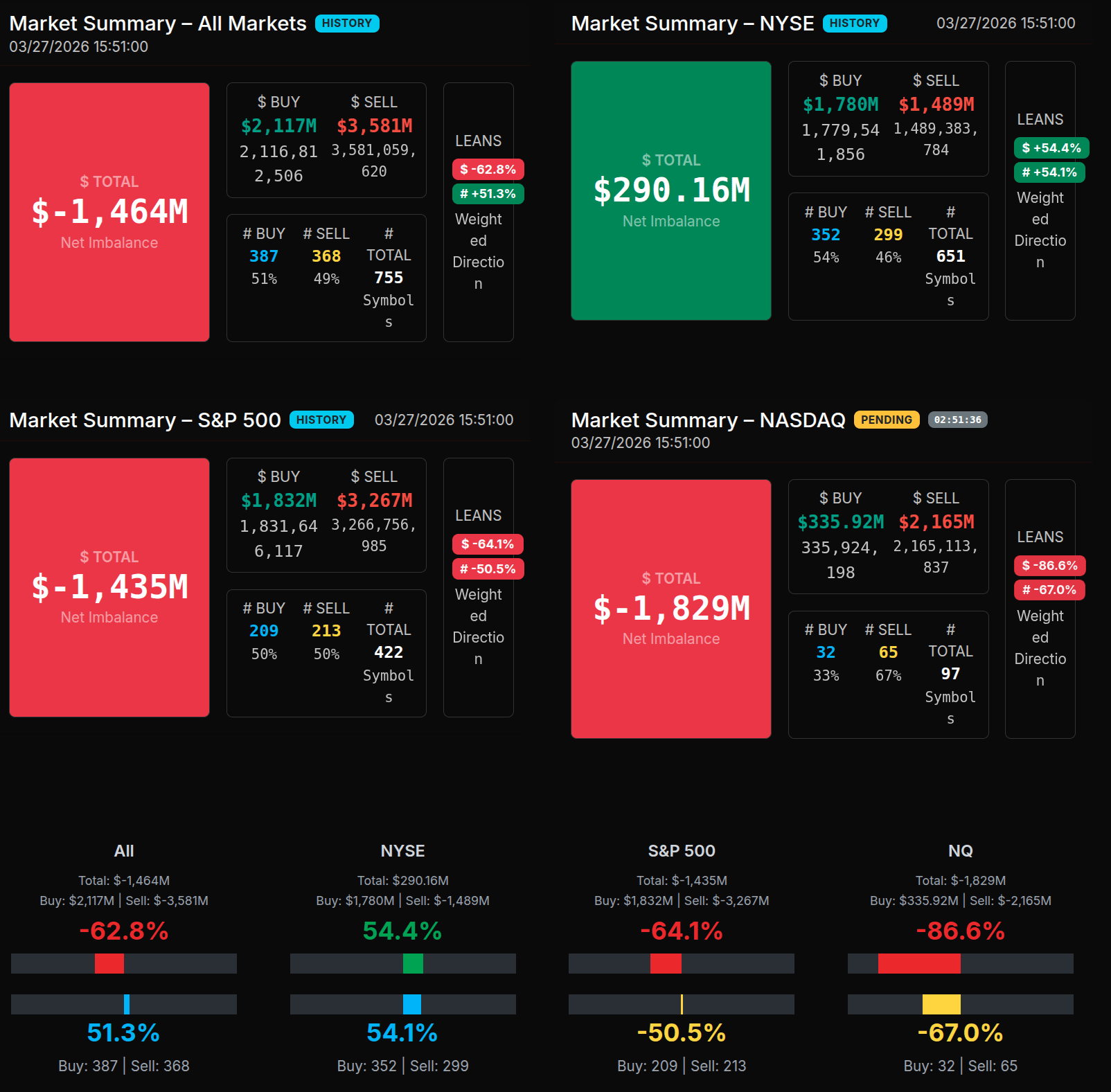
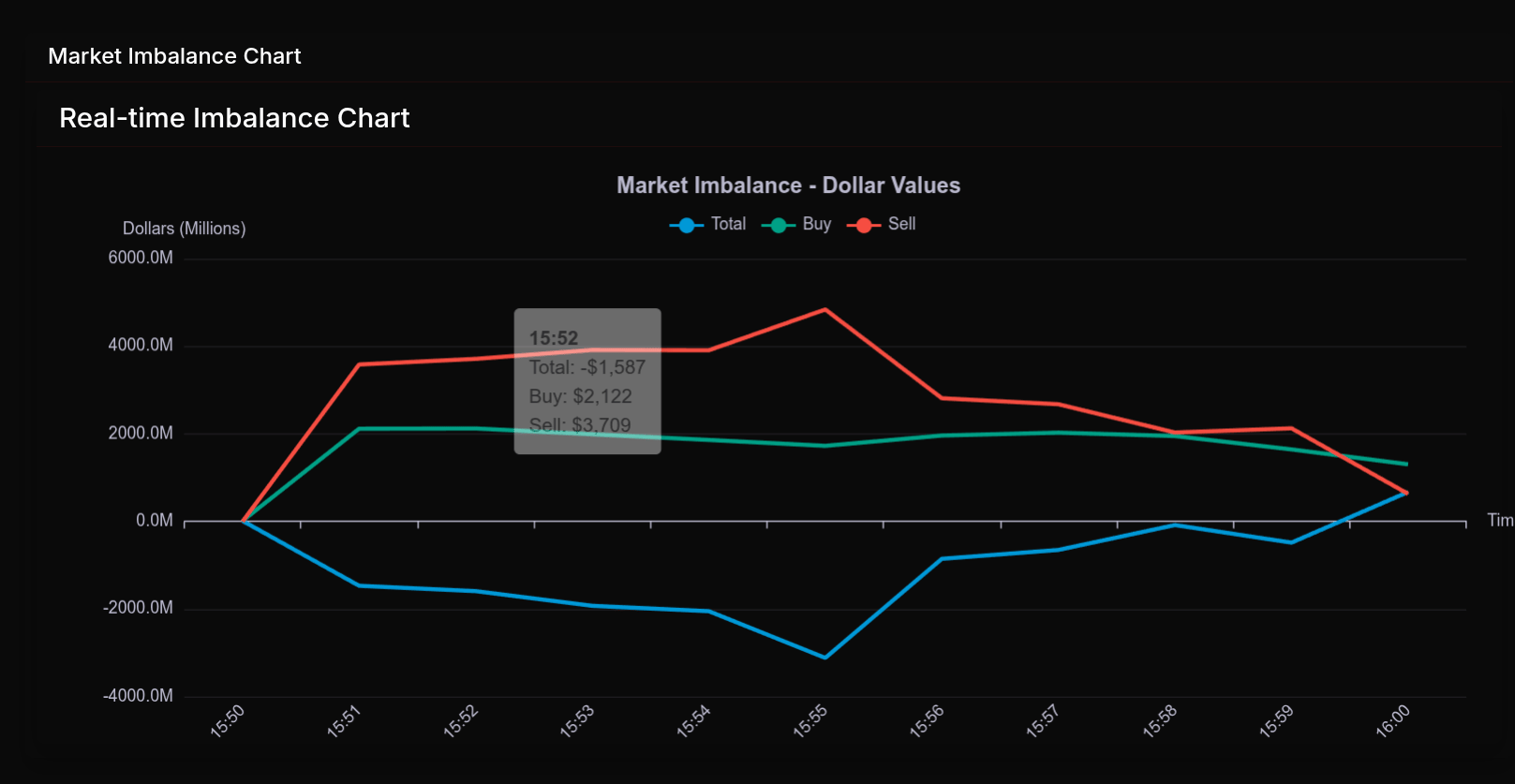
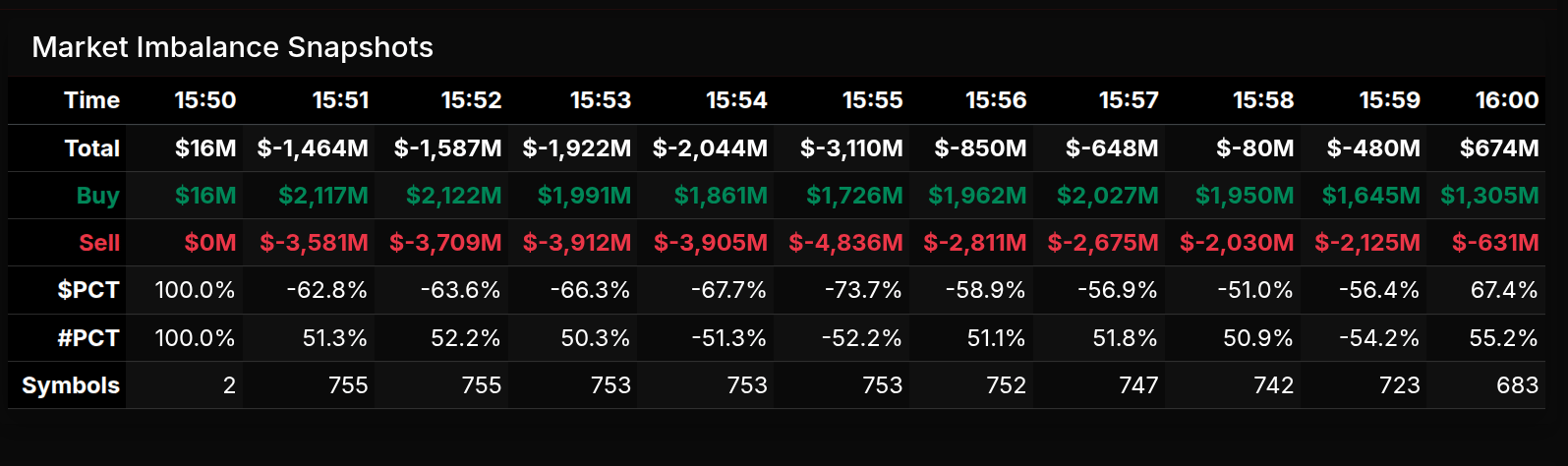
The MOC session opened with immediate and persistent sell pressure, setting the tone for a broadly imbalanced close. By 15:51, the market had already flipped to a sizable -$1.46B imbalance, with sell programs dominating and $PCT printing -62.8%. From there, the session intensified into a clear wholesale sell environment, with multiple readings beyond the -66% threshold—most notably -66.3%, -67.7%, and an extreme -73.7% at 15:55. These readings confirm aggressive institutional distribution rather than simple rotation.
The trajectory into the close showed consistent sell-side control, with total imbalances expanding to over -$3.1B mid-window before stabilizing. Despite some late compression, the final print flipped to +$674M, suggesting a late offset or paired rebalancing rather than a true directional shift.
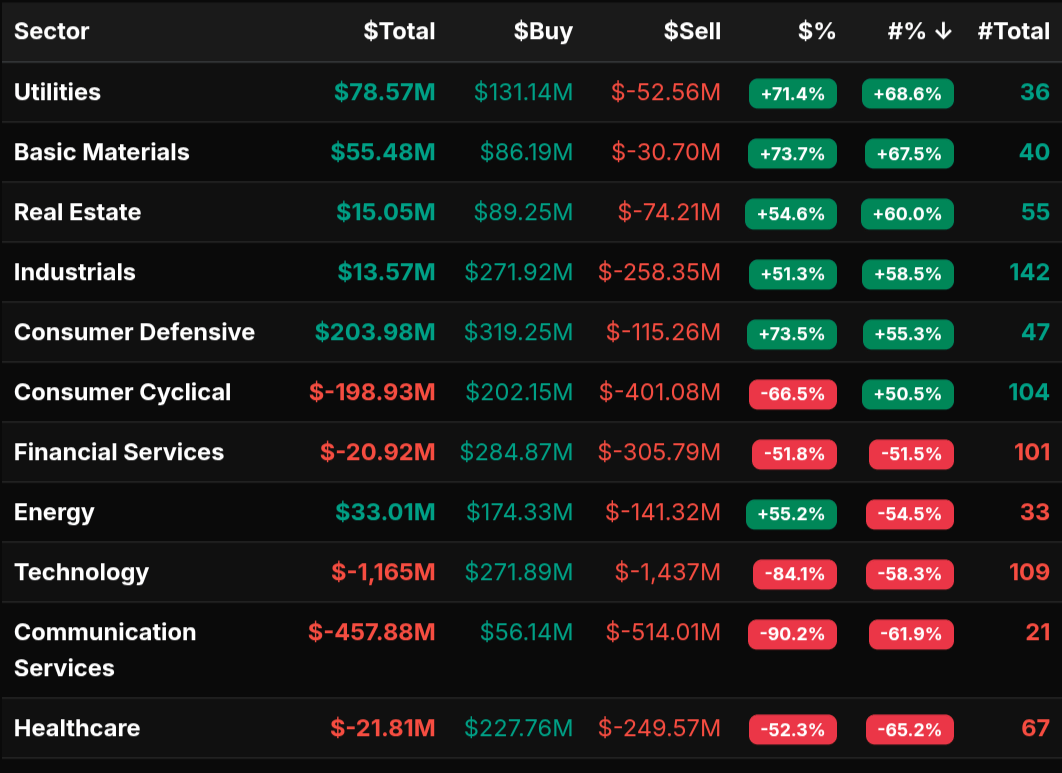
Sector flows reinforced the underlying narrative. Technology (-84.1%) and Communication Services (-90.2%) saw heavy, decisive liquidation—both well beyond the -66% threshold, indicating broad risk-off positioning. Consumer Cyclical (-66.5%) also reached that threshold, signaling systematic selling in growth-sensitive areas. Financials (-51.8%) and Healthcare (-52.3%) leaned sell but remained more rotational in nature.
On the buy side, defensives stood out. Utilities (+71.4%), Basic Materials (+73.7%), and Consumer Defensive (+73.5%) all printed strong buy imbalances above +66%, indicating targeted capital rotation into safety and inflation-resilient sectors rather than broad accumulation.
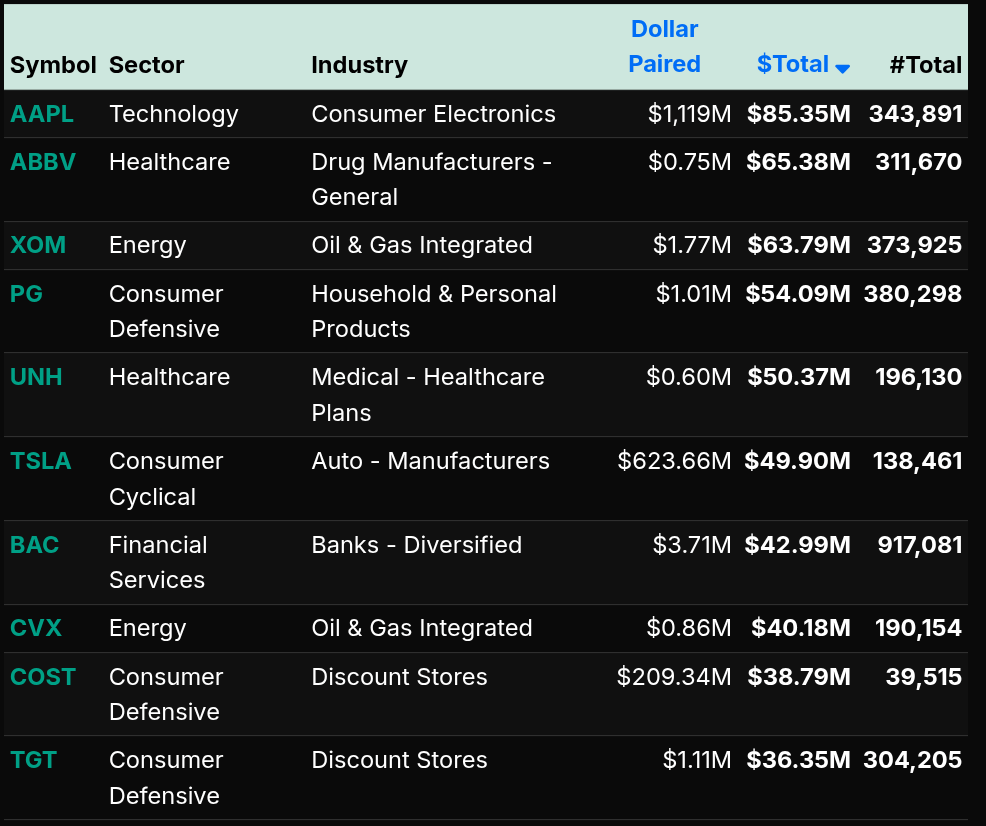
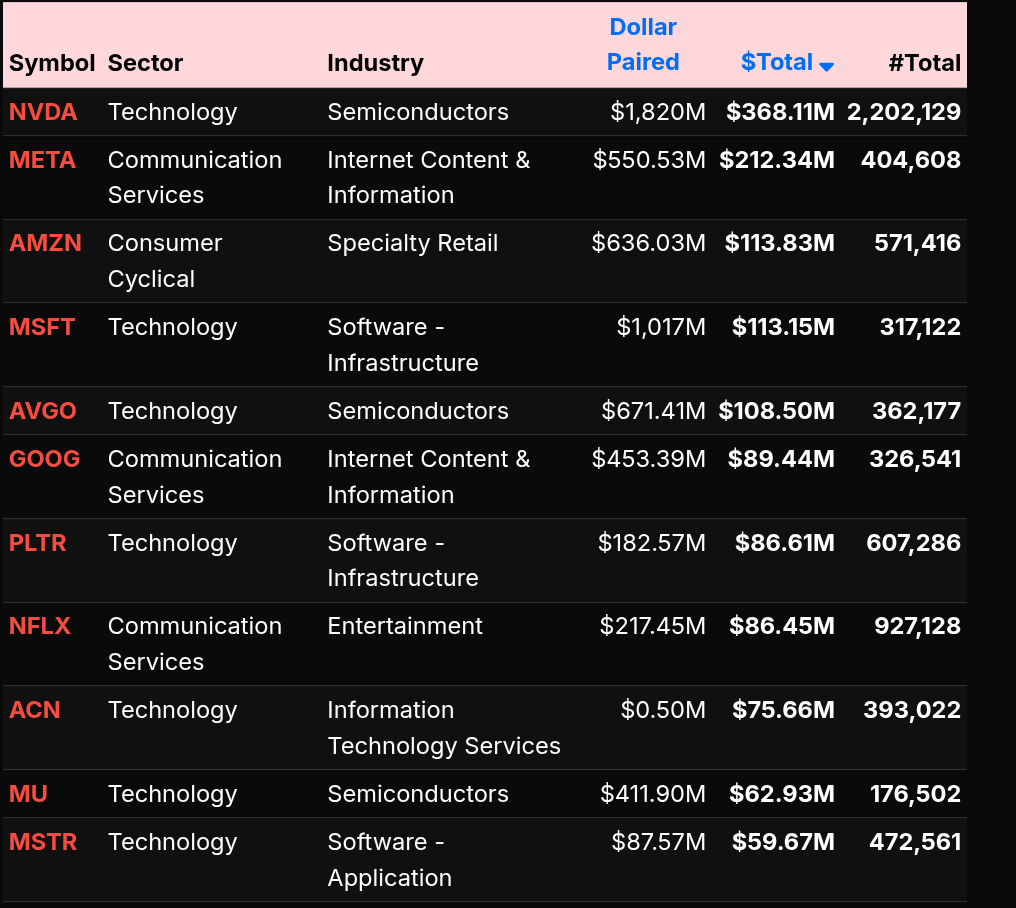
At the single-name level, the largest activity was concentrated in mega-cap tech and communication names. NVDA, META, AMZN, MSFT, and AVGO dominated the tape, largely contributing to the sell pressure in growth. Meanwhile, defensive and value-aligned names like ABBV, XOM, PG, and UNH saw steady buy interest, reinforcing the sector-level rotation.
Index-level data confirms the divergence. NYSE closed with a +54% buy lean, while NASDAQ printed an extreme -86.6%, highlighting a sharp bifurcation between defensive inflows and aggressive tech liquidation.
Overall, this was not a balanced close—it was a structurally bearish MOC driven by institutional unwinds in growth and a clear flight into defensives.
Technical Edge
Fair Values for March 30, 2026
SP: 41.31
NQ: 178.52
Dow: 226.33
Daily Breadth Data 📊
For Friday, March 27, 2026
NYSE Breadth: 30% Upside Volume
Nasdaq Breadth: 17% Upside Volume
Total Breadth: 22% Upside Volume
NYSE Advance/Decline: 22% Advance
Nasdaq Advance/Decline: 22% Advance
Total Advance/Decline: 22% Advance
NYSE New Highs/New Lows: 76 / 219
Nasdaq New Highs/New Lows: 45 / 571
NYSE TRIN: 0.66
Nasdaq TRIN: 1.30
Weekly Breadth Data 📈
For Week Ending March 27, 2026
NYSE Breadth: 54% Upside Volume
Nasdaq Breadth: 46% Upside Volume
Total Breadth: 49% Upside Volume
NYSE Advance/Decline: 47% Advance
Nasdaq Advance/Decline: 39% Advance
Total Advance/Decline: 42% Advance
NYSE New Highs/New Lows: 156 / 308
Nasdaq New Highs/New Lows: 217 / 837
NYSE TRIN: 0.74
Nasdaq TRIN: 0.72
BTS Levels - (Premium Only)
Room Summaries:
Polaris Trading Group Summary - Friday, March 27, 2026
The day started with a clear tone: Capital Preservation Friday, so the focus was on disciplined, selective trading rather than aggressive risk-taking. David noted early that lower targets had already been fulfilled, which framed the session as more of a reactionary/confirmation day than a big directional opportunity.
Morning Session
CL Open Range Long triggered early, giving traders an initial opportunity right out of the gate.
Discussion around open range timeframes (3m vs 5m vs 15m) reinforced an important lesson:
→ shorter timeframes (like 3m) can lead to chop and false signals, while slightly higher timeframes provide better stability.Strong educational focus on:
EMA relationships (34 vs 89)
Context vs signal timing
Recognizing when a move is early vs after structure shift
Key takeaway: Context matters more than the signal itself.
Mid-Morning ट्रेड Development
The group identified a cycle day type (Cycle Day 2) with:
D-shaped profile
Balanced / rotational behavior
Traders called out PKB (Pullback continuation setups) and symmetry concepts.
Barbara and others highlighted clean reads like:
“filling” behavior
structural balance before break
Key takeaway: Understanding market structure (balance → break) led to higher-quality trades.
Midday → Early Afternoon
Market began showing signs of:
Repeated push failures
Attempted bottoming behavior
David guided traders to:
Stay interested in longs on pullbacks
Watch VWAP (6488 area) for control shifts
However:
Bulls failed to reclaim VWAP convincingly
Tape action became sluggish and heavy
Key takeaway: When key levels (like VWAP) fail to convert, bias must stay flexible.
Late Day (MOC Insight)
David returned and immediately identified:
Steady liquidation
“Ticks on bricks” (persistent selling pressure)
Clear risk-off environment
Confirmed with:
$1B+ sell imbalance into the close
Weak quarterly tone overall
Final read: Bearish pressure dominated into the close despite earlier bottoming attempts.
Overall Lessons from the Day
1. Capital preservation mindset matters
Not every day is for big wins—protecting gains is part of the strategy.
2. Context > Signals
EMA alignment, structure, and timing made the difference between good and poor entries.
3. Balance days require patience
D-shaped / rotational days reward precision, not overtrading.
4. VWAP remains king
Acceptance vs rejection at VWAP clearly defined control throughout the day.
5. Be adaptable
Early long opportunities existed, but failure at key levels required shifting bias.
Positive Takeaways
Clean execution on open range and PKB setups
Strong engagement and technical discussion among members
Reinforcement of core PTG concepts (symmetry, structure, VWAP control)
Traders actively thinking—not just following signals
DTG Room Preview – Monday, March 30, 2026
Macro / Geopolitics
Middle East conflict remains primary market driver
Oil +3%, WTI back above $100
Continued US/Israel strikes; US increasing troop presence
Mixed signals on US–Iran negotiations; no clear resolution
Market Overview
US futures modestly higher into shortened holiday week
S&P 500 -7% YTD; Nasdaq & Dow in correction territory
2025 tailwinds (AI, earnings growth, rate cuts) fading
Market now leaning toward potential Fed hike
Equities
Mag 7 lost ~$850B last week
Weakness led by META & GOOG after major legal ruling
Risk / Sentiment
VIX elevated at ~31 (fear remains high)
Gold down ~$500
Bitcoin near $65K
Early signs of dip-buying from some funds (“buy fear” theme)
Macro Calendar
Light week for data
Powell speaks today (10:30am ET)
Jobs Report Friday (markets closed)
Positioning / Flow
Volatility elevated; ranges expanding
Whale flow leaning bullish into the open
ES Technicals
Support: 6353–6348 (key breakdown level)
Resistance: 6628–6623, 6723–6718, 6912–6907
200-day MA (6772): overhead resistance, less relevant now
50-day MA (6865): trending lower toward 200-day
Bottom Line
Market caught between geopolitical risk and early dip-buying
Key support zone likely to dictate near-term direction